Skills That Employers Look For
Skills That Employers Look For. When it comes to recruiting graduates, attitudes and aptitudes are often seen as more important than formal qualifications. Web communication is therefore the first thing noted by the interviewer.
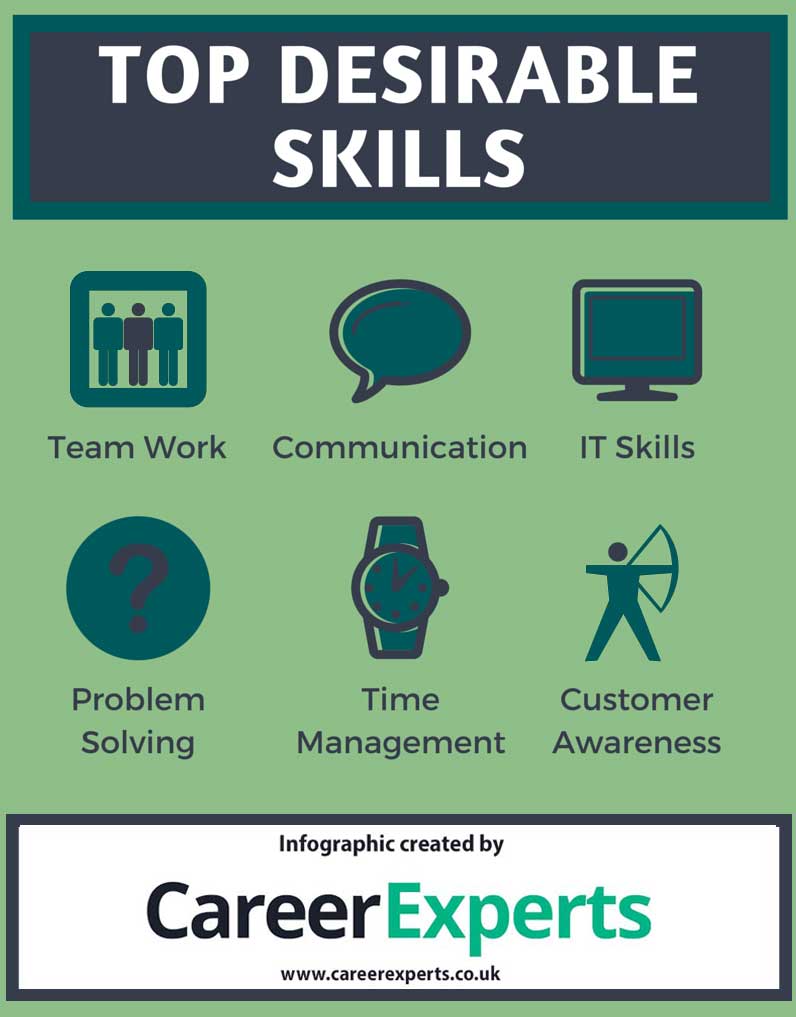
There are various kinds of work. Certain are full-time, while others are part-time. Some are commission based. Each has its particular system of regulations and guidelines that apply. There are a few issues to consider when making a decision to hire or fire employees.
Part-time employeesPart-time employees are employed by a business or other entity, but work less working hours than a full-time employee. However, part-time workers may still be able to receive benefits from their employers. These benefits vary from employer to employer.
The Affordable Care Act (ACA) defines part-time workers as workers with a minimum of 30 an hour per week. Employers have the choice of whether to provide paid vacation time to part-time employees. Most employees are entitled to a minimum of the equivalent of two weeks' paid vacation each year.
Many companies offer workshops to help part-time employees learn new skills and grow in their careers. This can be a good incentive for employees to remain within the company.
There isn't a law of the United States on what the definition of a "fulltime employee is. While in the Fair Labor Standards Act (FLSA) does not define the word, employers often offer different benefit plans to their part-time and full-time employees.
Full-time employees typically make more than part-time employees. Additionally, full-time employees may be entitled to benefits from the company such as health and dental insurance, pension, and paid vacation.
Full-time employeesFull-time employees typically work for more than five days per week. They may also have more benefits. However, they might also be missing family time. The work hours of these workers can become excruciating. Some may not recognize potential growth opportunities in their current jobs.
Part-time employees can benefit from a an easier schedule. They're likely to be more productive and may have more energy. This helps them satisfy seasonal demands. However, those who work part-time have fewer benefits. This is why employers need to define full-time and part-time employees in the employee handbook.
If you're going to take on employees on a temporary basis, you must determine the many hours the person will be working each week. Some employers have a payment for time off to part-time workers. It might be worthwhile to offer additional health benefits or payment for sick time.
The Affordable Care Act (ACA) defines full-time employees to be those who work or more hours per week. Employers must offer health insurance for these employees.
Commission-based employeesCommission-based employees are those who earn a salary based on amount of work performed. They usually perform the roles of marketing or sales in retail stores or insurance companies. But, they are also able to work for consulting firms. In all cases, those who work on commissions are subject to Federal and State laws.
In general, employees who carry out contracted tasks are compensated a minimum wage. For every hour they are working the employee is entitled to a minimum pay of $7.25 in addition to overtime compensation. is also expected. The employer is required to take the federal income tax out of the commissions received.
Employees working with a commission-only pay structure still have access to some benefitslike unpaid sick day leave. They are also allowed to make vacations. If you're uncertain about the legality of commission-based pay, you may consider consulting an employment attorney.
Anyone who is exempt of the FLSA's minimum wages or overtime regulations can still earn commissions. The workers who qualify are generally thought of as "tipped" employees. Typically, they are defined by the FLSA as those who earn more than the amount of $30 per month for tips.
WhistleblowersEmployees with a whistleblower status are those who disclose misconduct in the workplace. They could report unethical or criminal conduct , or report other laws-breaking violations.
The laws protecting whistleblowers working in the public sector vary from state the state. Certain states protect only employers in the public sector, while other states offer protection to private and public sector employees.
While some laws explicitly protect whistleblowers in the workplace, there's other laws that aren't as popular. But, the majority of state legislatures have passed laws protecting whistleblowers.
A few of these states are Connecticut, Idaho, Nevada, Ohio, Oregon, Pennsylvania, Vermont, Washington, Wisconsin, and Virginia. Additionally the federal government also has several laws that safeguard whistleblowers.
One law, called the Whistleblower Protection Act (WPA) guards employees against Retaliation when they speak out about misconduct in the workplace. In its enforcement, it is administered by the U.S. Department of Labor.
Another federal statute, the Private Employment Discrimination Act (PIDA) doesn't bar employers from dismissing an employee in the event of a protected disclosure. But it does permit the employer to make creative gag clauses within the contract of settlement.
Web seek to understand. According to statistics in 2017, about 48% of employers are looking for computer skills as a common skill among potential employees. Web essential skills employers look for.
Soft Skills Or Interpersonal Employee Skills Are Also Important, Along With.
Web active listening, reliability, the ability to provide and receive feedback, and patience are examples of common leadership abilities to highlight on your resume. According to statistics in 2017, about 48% of employers are looking for computer skills as a common skill among potential employees. Web computer skills refer to a person’s ability to operate various types of technology, such as computers, computer software, computer programs, and.
Web Many Hard Skills Relate Strongly To A Particular Job Or Industry.
Web top skills employers look for analytical skills. Web essential skills employers look for. Web communication is therefore the first thing noted by the interviewer.
Creative Individuals Are Skilled At Surviving In Rapidly Evolving.
Web top 12 flexible career skills 1. Web what skills are employers looking for? When it comes to recruiting graduates, attitudes and aptitudes are often seen as more important than formal qualifications.
They Understand That The World Of Work Has Changed And New Skills Are Needed.
Web incorporating skills to staying calm in tough situations and coming up with the best strategies to resolve such problems is one of the top skills that employers always. Web seek to understand. As well as skills specific to the job you’re going for, employers are also looking for general job skills.
Web The Top 10 Skills You’ll Need Are:
There are several essential skills that employers look for when selecting candidates to interview and hire. This can be practiced today in your everyday work and interactions at home. However, some are more broadly useful, applying to nearly every industry, company, and even role.